
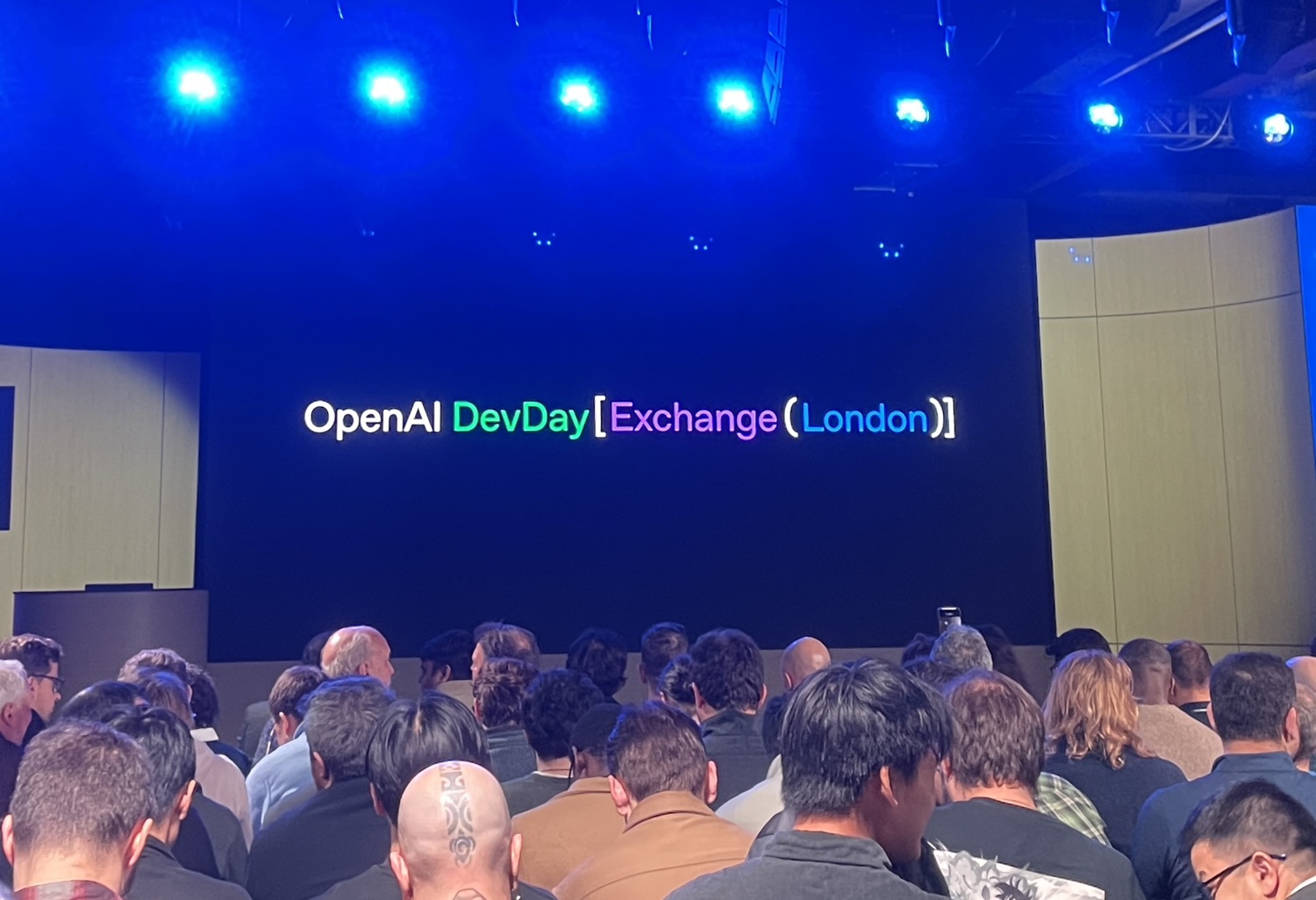
4 November 2026 | Executive briefing | Based on the keynote transcript
The big picture
OpenAI is moving from AI as a tool you use to AI as a workforce you orchestrate.
The keynotes revealed three major shifts:
- From assistants to proactive agents: AI increasingly monitors, initiates and completes work without constant prompting.
- From human-only teams to human–AI workspaces: agents, people and business systems collaborate in shared environments.
- From building software to directing software creation: coding, testing, security and deployment increasingly become agent-executed activities.
For Team Liftoffs, the opportunity is no longer simply helping teams adopt AI. It’s helping organisations redesign how work gets done.
1. Key headlines and implications
| Key headlines | implications |
|---|---|
| Dots: Always-on AI agents | Proactive digital workers that remember context, monitor events and execute responsibilities. AI team members become operationally credible. |
| ChatGPT Space: Shared human–AI workspace | Humans and agents collaborate on plans, research, documents and deliverables. The workspace itself becomes AI-native. |
| Codex: Software development at the speed of thought | Voice-driven coding, multi-agent workflows and rapid application generation. Engineering throughput is no longer constrained in the same way by coding capacity. |
| Computer Use: Agents operate interfaces | Agents navigate applications, run tests, inspect screens and capture evidence. Manual QA and repetitive operational work become candidates for delegation. |
| Agents SDK: Production-grade orchestration | Memory, context management, compaction, tools and multi-agent capabilities. Enterprise agents become easier to build and manage. |
| MCP Events: From reactive to proactive | External systems trigger agent workflows when business events occur. AI can respond to changes without waiting for a human prompt. |
| ChatGPT Plugins: Native business applications | Rich interfaces, dashboards, editors and connected systems inside ChatGPT. ChatGPT becomes a distribution and workflow platform. |
| Sign in with ChatGPT | Users can access participating applications using their ChatGPT identity and eligible entitlements. Lower friction for customer acquisition and adoption. |
| Model economics: Faster and cheaper intelligence | Multiple model tiers, faster inference and low-latency decisions. More previously uneconomic automation becomes viable. |
| Enterprise cloud distribution | OpenAI described availability across Azure, AWS Bedrock and planned GCP support. AI deployment can increasingly follow existing enterprise infrastructure. |
2. What matters most to technology teams
- Coding is no longer necessarily the bottleneck. Codex can generate, modify and test applications rapidly. The constraints shift towards requirements, architecture, integration, validation and deciding what deserves to be built.
- QA becomes an agent workflow. Computer Use demonstrated agents navigating applications and testing configurations. Human testers increasingly design validation strategies and assess risks rather than execute every test manually.
- Security shifts further left — and becomes continuous. Codex Security supports vulnerability discovery, scheduled scans, deduplication and suggested fixes. Security teams move towards oversight and verification of automated findings.
- Small teams can deliver disproportionately more. The founder’s example: work that previously consumed months or years of backlog might now take weeks. The implication is faster experimentation, pivots and product iteration, although this is a keynote claim rather than a measured general benchmark.
- Orchestration becomes a core engineering competency. Choosing models, allocating agents, managing context, integrating tools and validating results become essential skills alongside conventional software engineering.
3. What matters to Team Liftoffs
AI-native team design is becoming a real organisational problem. OpenAI is building infrastructure for humans and agents to work together. Organisations will need new roles, responsibilities, decision rights, operating rhythms and governance.
Mission-driven teams become more important than task-driven teams. When execution gets cheaper, clarity about objectives, boundaries, priorities and success criteria becomes more valuable. This strongly supports the Team Liftoffs approach of vision alignment, mission objectives, mission tests and simple rules.
GTM teams can become smaller and more capable. Research, CRM updates, lead qualification, customer preparation, reporting and follow-up can increasingly be orchestrated through agents. Humans retain responsibility for positioning, relationships and commercial judgement.
Team Liftoffs could itself become an agent-powered product. The GTM Diagnostic could evolve beyond a one-off report into a persistent agent that monitors progress, recommends experiments and helps teams execute their 90-day mission.
4. Enterprise implications
| Enterprise concern | Emerging implication |
|---|---|
| Operating model | Design for mixed human–agent teams, not merely AI-assisted employees. |
| Workforce and capacity | Measure outcomes and effective throughput, not just headcount or utilisation. |
| Governance | Define agent permissions, escalation paths, auditability and human accountability. |
| Portfolio management | Faster delivery increases the importance of selecting the right initiatives. |
| Tooling | ChatGPT and agent platforms may increasingly become orchestration layers across existing systems. |
| Transformation | Move from isolated AI pilots to redesigning complete workflows and value streams. |
| Leadership | Leaders must articulate what humans own, what agents execute and how performance is assessed. |
5. Notable figures and product announcements
- Top 5 UK API market — UK ranked among OpenAI’s five largest API usage markets.
- ~10× Decisions API speed — claimed relative to the Responses API for constrained decisions.
- 100× API growth — reported growth in Responses API usage during the year.
- 4,000+ plugins — reported number submitted or available in the ecosystem.
Additional announcements included GPT-6 model tiers (Astra, Sol and Luna), Turbo Fast inference, GPT Image 2.5, expanded voice capabilities, Codex cloud and remote access, richer plugin interfaces, simplified plugin submissions and subscription-linked API credits.
Figures and launch details reflect the speakers’ claims in the keynote transcript, which contains transcription errors. They have not been independently verified.
6. Five strategic conclusions
- The unit of productivity is shifting from the individual to the human–agent system.
- Execution is becoming cheaper; judgement, direction and coordination become more valuable.
- AI-native transformation is an operating-model challenge, not merely a technology rollout.
- The next competitive advantage may come from organisations that orchestrate agents effectively, rather than those that simply provide AI tools to employees.
- Small, high-agency teams can increasingly challenge much larger organisations.
The Team Liftoffs headline
Agile changed how teams organise work. AI-native changes who — or what — does the work.
The next challenge for enterprise leaders is not simply adopting AI. It is designing teams, missions and operating models where humans and intelligent agents work together to deliver outcomes.
One particularly important observation: OpenAI is demonstrating plenty of the technology for AI-native organisations, but relatively little of the management system required to operate them effectively.
That gap is potentially where Team Liftoffs belongs.