

Question from the hotline: A room, a deck, people gazing into their laptops, with a few polite nods when looking up at the slides, and then the hour’s up, everyone disappears into the next meeting.
It’s not uncommon!
We’ve seen $1m projects kicked off like this in an hour.
A Team Liftoff takes a different path.
First, the duration.
A proper Liftoff isn’t slotted into just a one-hour free time slot. The time is made available. It typically unfolds over two days. Not because we enjoy long workshops, but because alignment, when done properly, takes time to emerge. You can’t compress shared understanding into a calendar slot and expect it to hold under pressure.
Second, the structure.
Most kickoffs are top-down: managers present, teams receive. The assumption is that clarity can be transmitted. Or even that management has all the clarity upfront, which is unrealistic.
In a Liftoff, clarity is co-created.
Sponsors, leaders, and team members all participate in shaping the core artefacts together. Not as a formality but as the mechanism through which real understanding is built.
The outcome is what we call Team Operating System:
- A shared sense of purpose
- A grounded alignment on direction
- A clear and contextualised view of the environment
Purpose, alignment, context
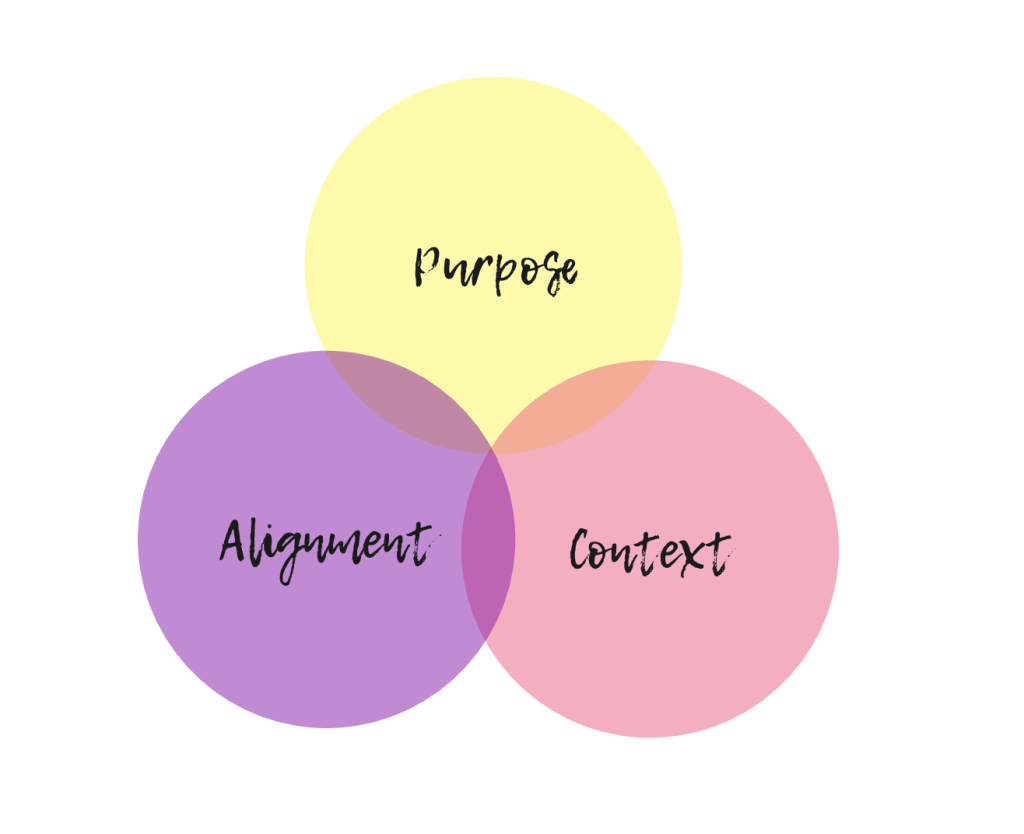
Not just written down, but understood, questioned, and owned by everyone in the room.
To get there, we don’t rely on a single moment or presentation.
A Liftoff is composed of a sequence of at least nine activities, each designed to surface assumptions, connect perspectives, and progressively strengthen the team as a system.
Remember: how you start determines how you continue.
And in complex environments, that difference compounds quickly, depending on how you started.