
AI’s value is becoming visible but not always immediately measurable. The harder question for leaders is whether it is changing what their teams can achieve.
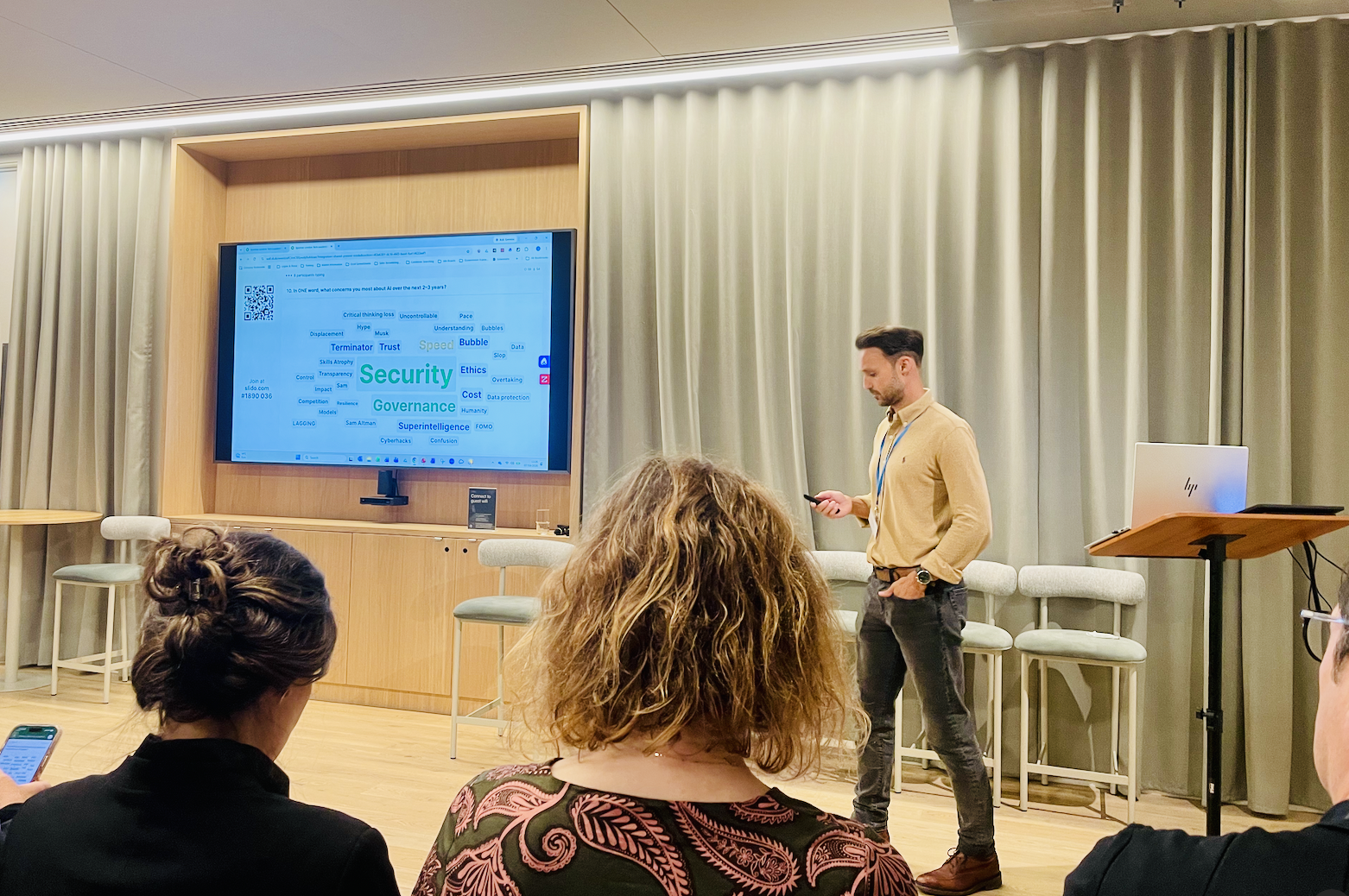
A recent poll at an Xpertise London Tech Leaders Conference offers a revealing snapshot. Employee productivity was the leading area of measurable AI value, selected by 53% of respondents. Operational efficiency and cost reduction followed at 24%. Innovation and new products or services accounted for 17%, while revenue growth received 0%.
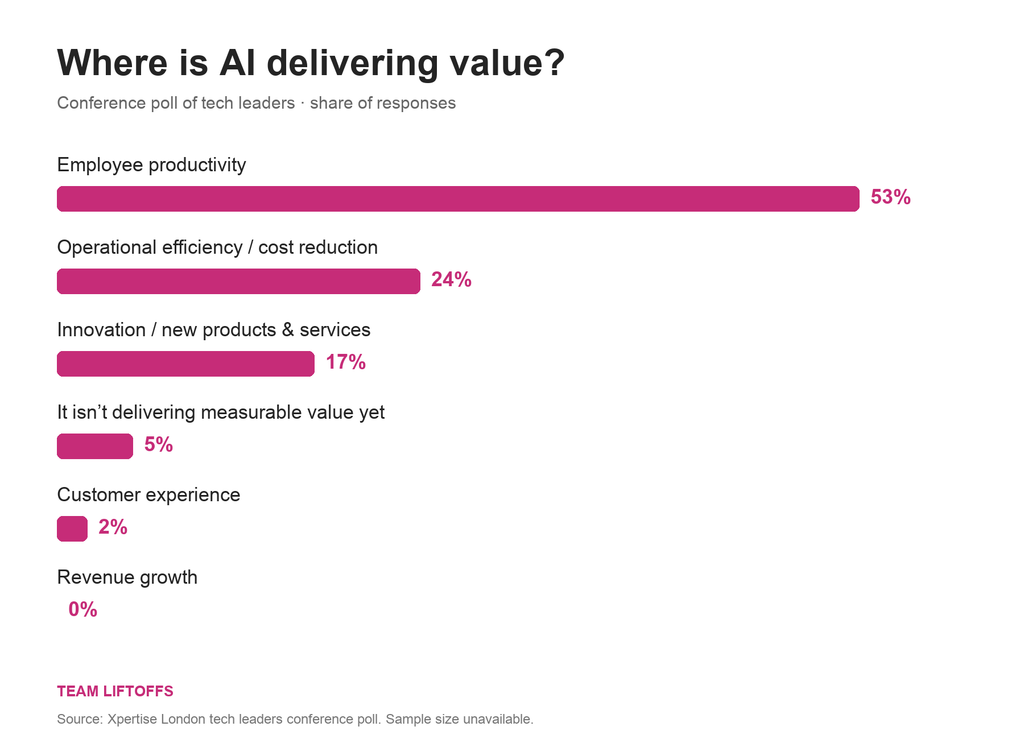
These results suggest that AI’s immediate contribution is concentrated in improving existing work. Turning those improvements into greater team capacity and business results remains an unfinished task.
Our Team Liftoffs research helps explain why. Across 399 problem statements covering 197 distinct tasks, people described both the work holding them back and what they hoped to achieve if AI could help. Their responses point towards an opportunity that goes beyond completing tasks faster: creating teams with more capacity for valuable work.
1. Productivity gains need a destination
At the conference, 32% of respondents said they could demonstrate AI’s value but could not show financial ROI. Only 15% reported clear, Finance-validated returns.
That distinction matters. A useful tool can save someone time without producing an identifiable improvement in team performance. Leaders need to understand what happens next: does the team serve more customers, reduce delays, improve quality or make room for work it previously could not undertake?
In our research, focusing on higher-value work and saving time each represented 16% of desired outcomes. Increasing output or scale accounted for 9%, while reducing stress and focusing on creative or strategic work each accounted for 7%.
People have a purpose in mind for the capacity AI could release. Transformation needs to connect that purpose to team priorities and business outcomes.
2. Scaling teams requires redesigning work
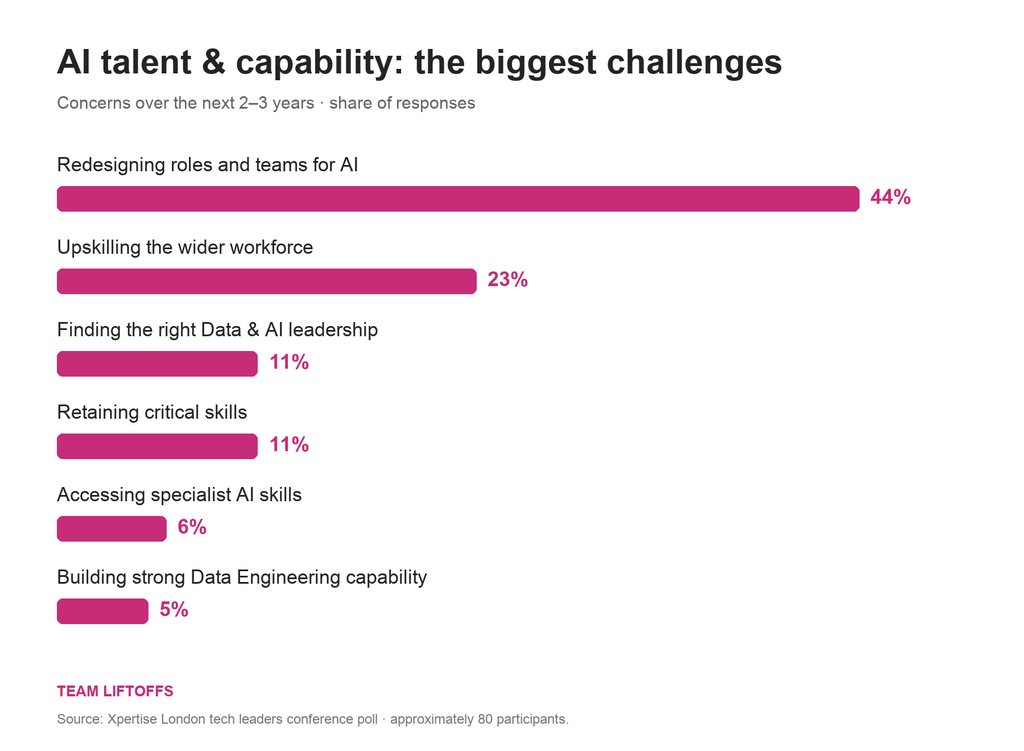
The conference’s strongest signal about future capability was clear: 44% selected redesigning roles and teams for AI as their leading concern over the next two to three years. Workforce upskilling followed at 23%.
This shifts the leadership challenge. Giving people access to AI is one step. Deciding how responsibilities, handovers and decisions should change is another.
Our research makes that challenge concrete. Respondents described friction in manual reporting, employee onboarding, client outreach and development work. These activities sit within wider workflows, involving dependencies and contributions from several people.
Improving one task may leave the surrounding bottlenecks intact. To scale a team’s capacity, leaders need to examine the whole flow of work: what AI can handle, where human judgement adds value, who checks the result and how the next person receives it.
The opportunity is to increase what the team can reliably deliver while protecting quality and creating space for expertise.
3. Adoption depends on outcomes people care about
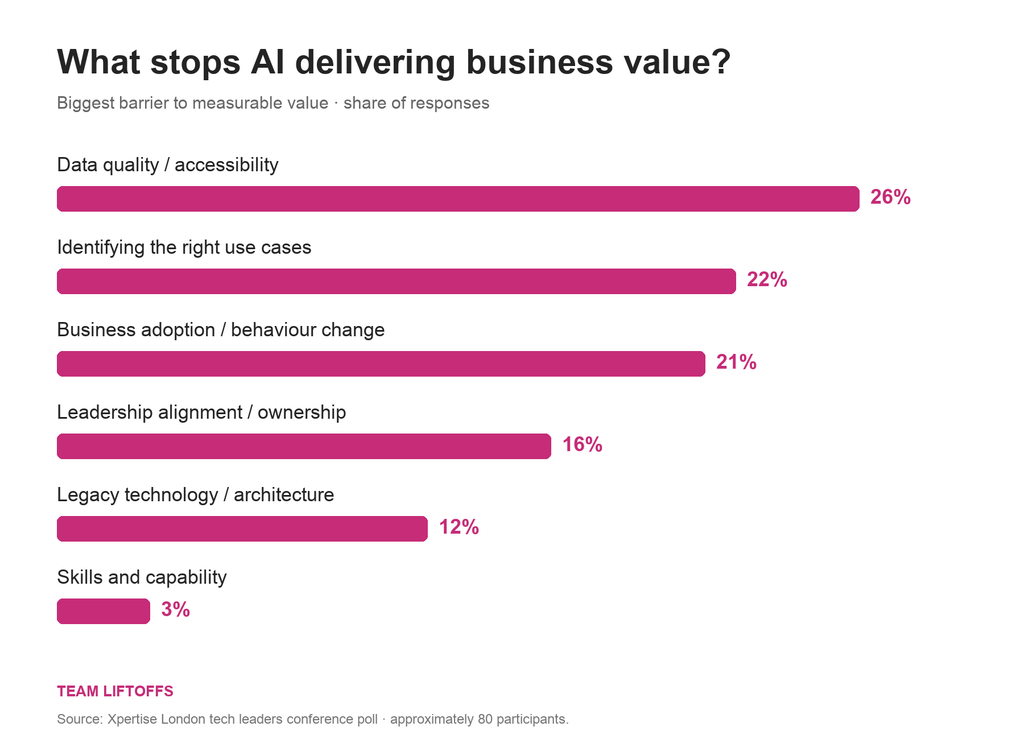
As we have seen in Notion’s transformation model, data is one of the three key pillars. No surprise there, but emphasises again a key point about data.
Business adoption and behaviour change was the biggest barrier to measurable value for 21% of conference respondents. Identifying the right use cases was selected by 22%.
Our findings suggest these challenges belong together.
Teams described wanting relief from repetitive setup, chasing information, preparing reports and screening applications. Their desired outcomes included more time with clients, more creative work and less mental load.
That provides a practical starting point for adoption. Begin with a recurring problem people recognise, then agree what improving it should make possible.
The personal benefit and the business benefit should reinforce one another. Less time chasing client information could mean more capacity for meaningful customer conversations. Easier reporting could give a team more time to interpret findings and act on them.
4. Leadership alignment is part of the work
Have a look at this:
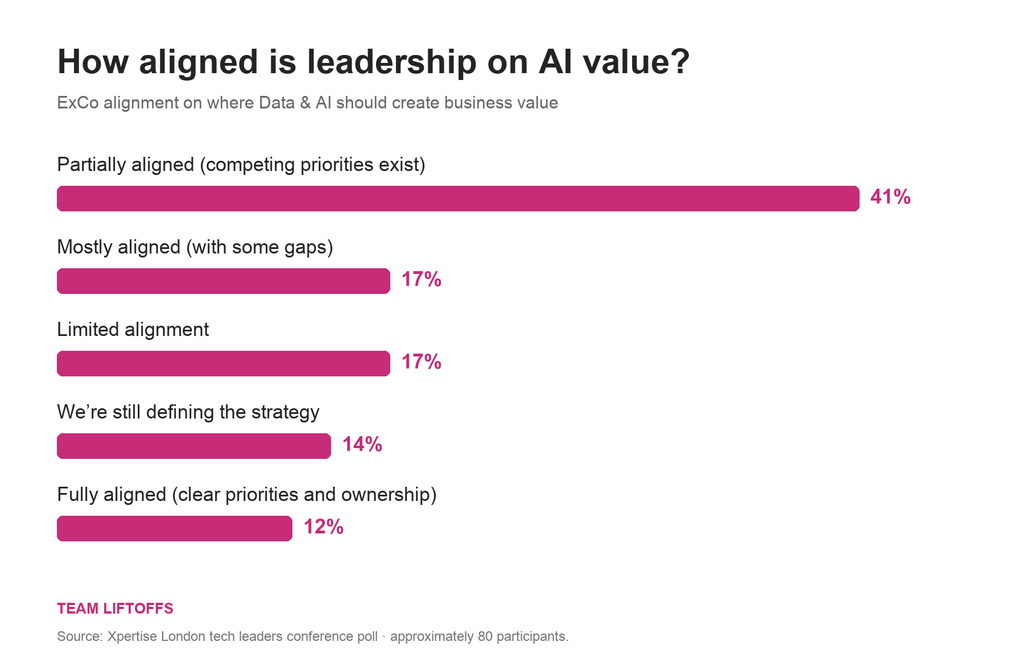
Only 12% of conference respondents described their executive committee as fully aligned on where data and AI should create business value. The largest group, 41%, reported partial alignment with competing priorities.
Meanwhile, 26% identified data quality or accessibility as the biggest barrier to value.
Teams need leadership decisions about priorities, access, ownership and success measures to make progress. Without them, promising experiments can struggle to become dependable ways of working.
Notion’s transformation model offers a useful way to describe this progression: from individual assistance towards recurring team workflows and coordinated organisational systems. It is a framework rather than proof of results, but its emphasis on context and workflow ownership fits the challenges leaders reported.
How Liftoff can help leaders make the transition
Liftoff can support leaders by connecting business ambition with the realities of team workflows, at the start of any team or project, especially now that AI requires the upfront thinking and de-risking.
Our research provides a starting point: understand the friction people experience and the outcomes they want. From there, leaders and teams can select a meaningful workflow, redesign responsibilities around AI, test the change and assess what it delivers.
That assessment should cover more than tool usage or estimated hours saved. It should examine team capacity, quality, cycle time and the destination of any time released—including the effort needed to check AI’s work.
The conference findings suggest that leaders already recognise the importance of redesigning teams. Team Liftoffs adds the human perspective needed to do that well.
The question for AI transformation is becoming more specific: what should this team be able to achieve that it cannot achieve today—and how must its work change to make that possible?
Note: The conference figures come from the respondents at the conference (sample about 80-100 Tech Leaders) and is a snapshot of that audience. Team Liftoffs findings describe reported workflow problems and desired outcomes.
Framework reference: Notion’s AI Transformation Model.